





How to Draw a Bighorn Ram
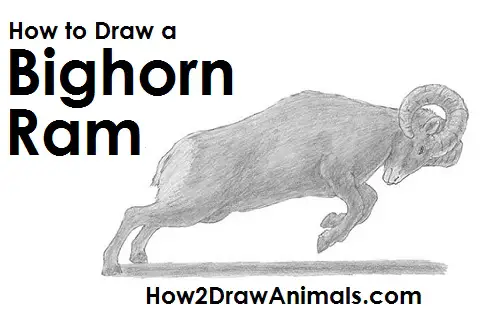
Please PAUSE the "How to Draw a Ram" video after each step to draw at your own pace.
Written step-by-step video tutorial:
For the first few steps, don't press down too hard with your pencil. Use light, smooth strokes to begin.
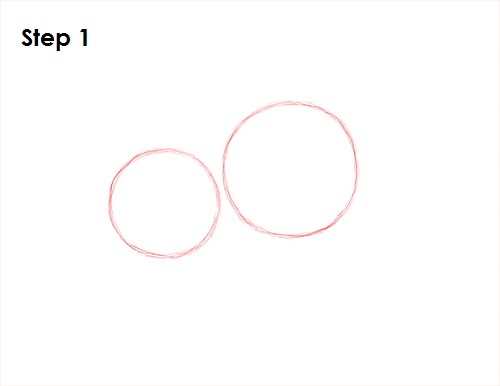
Step 1: Draw two circles as guides for the ram's body. The circles don't have to be perfect. They're just guides. The circle on the left should be a bit smaller and placed lower than the circle on the right. The lower circle gives the body a diagonal tilt. The edges of the circles should almost touch.
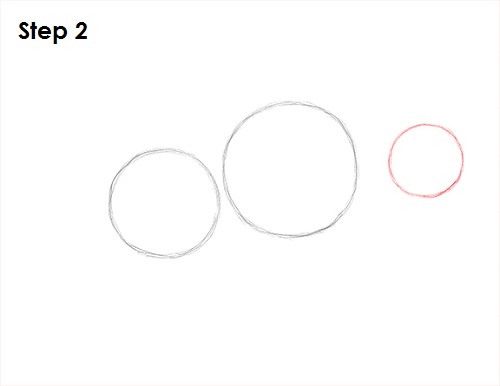
Step 2: Draw another circle on the right side as a guide for the ram's head. This circle should be about one-fourth the size of the first one. Don't place it too far away.
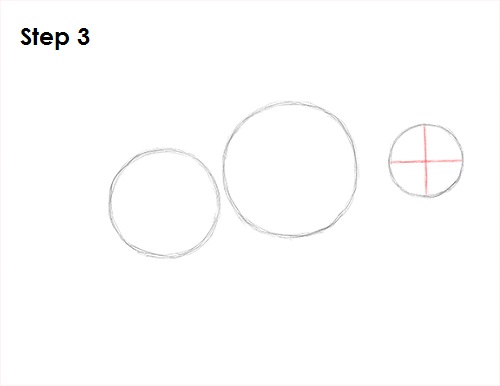
Step 3: Draw two intersecting lines inside the head. These lines will help you place the ram's facial features later on.
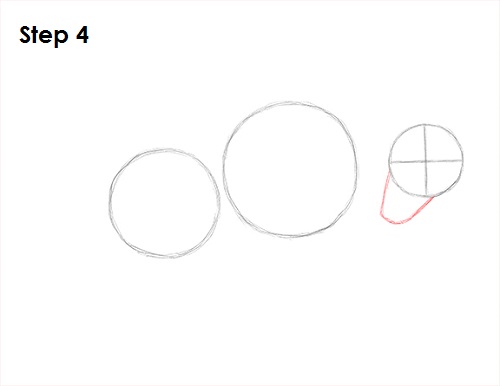
Step 4: Draw a U-shaped arc on the lower left side of the ram's head as a guide for the muzzle. The ram's head will be tilted down, leaning forward with the horns, so the muzzle needs to be low and close to the body.
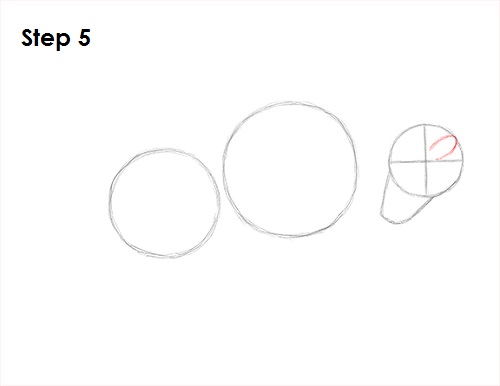
Step 5: Draw a small arc inside the ram's head on the upper right side as a guide for the ear.
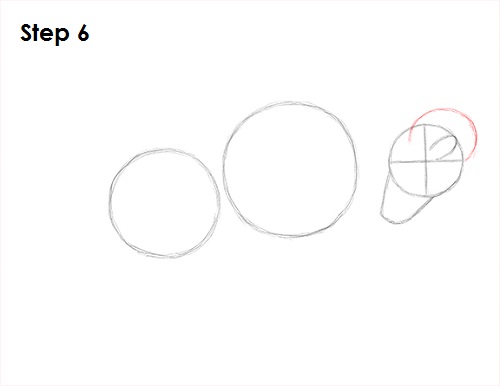
Step 6: Draw a long curved line on top of the head as a guide for the bighorn ram's curved horns.
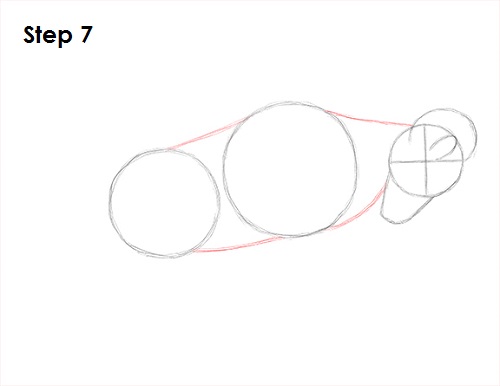
Step 7: Draw a series of lines that connect the major shapes and form the ram's body.
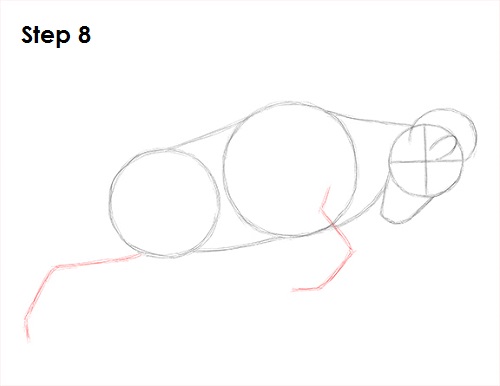
Step 8: Draw two angled lines under the body as guides for the ram's legs. Pay attention to where the lines bend. This indicates where the joints in the legs will be.
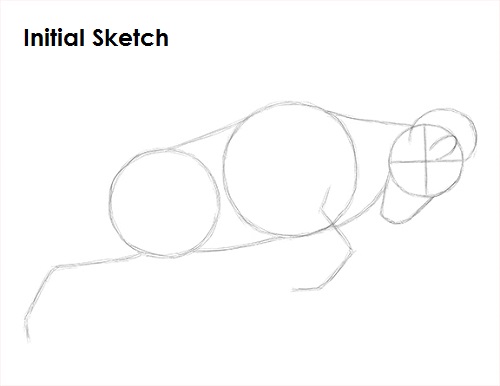
That's it for the initial sketch! From this point on, press harder on your pencil for a more defined sketch.
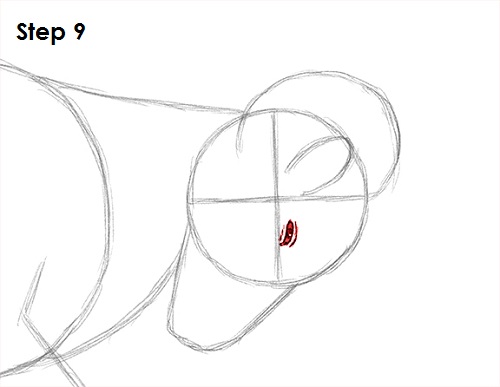
Step 9: Draw the ram's eye inside the head on the lower right section. The eye will be mostly closed, as the ram is bracing for impact. Draw two curved lines close together for the eye. Shade in the inside of the shape to indicate the eyeball. Add a few lines around the eye for extra detail.
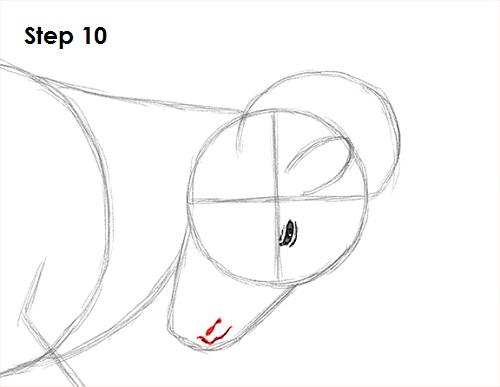
Step 10: Draw the ram's nose on the tip of the arc by using a small slit for the nostril and a curved line from the front part.
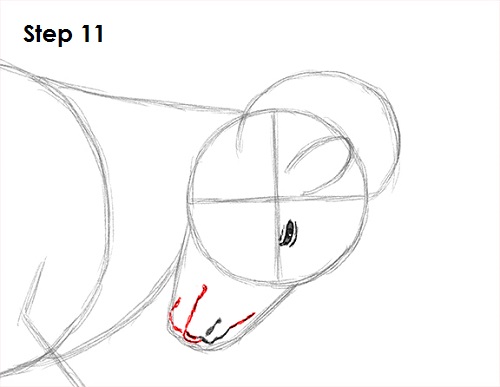
Step 11: Draw the rest of the ram's muzzle by using the arc as a guide. Draw the mouth to the left of the nose. Follow the path of the arc to draw the top and bottom of the ram's muzzle.
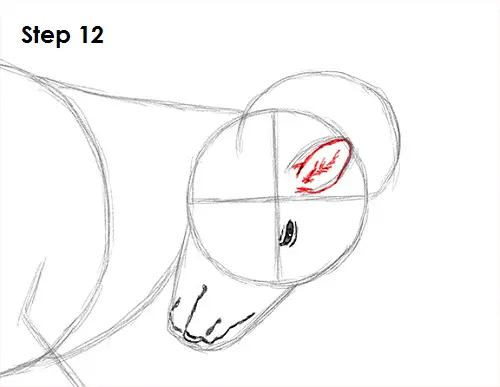
Step 12: Darken the arc on the right to create the ram's ear. Add a few lines for the fur inside.
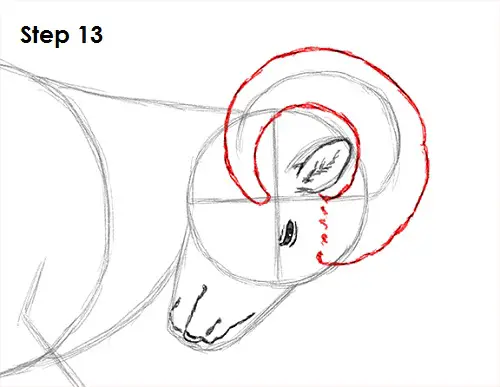
Step 13: Use the curved line as a guide to draw the horn. First draw the base of it using quick, short strokes. Then follow the path of the guide as you draw the second curved line around the ram's ear. Draw a longer curved line at the top as you follow the path to make the horn thicker. The horn should wrap around the ram's ear. You can make it bigger if you'd like.
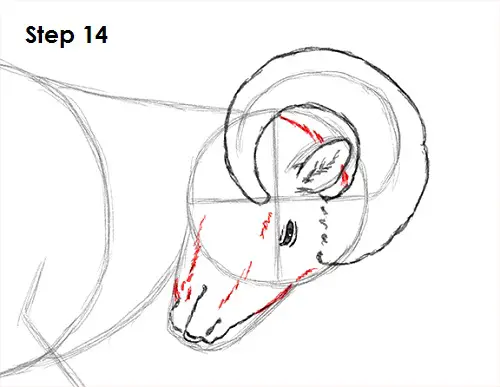
Step 14: Draw the rest of the bighorn ram's head using the initial guides. Use quick, short strokes as you draw to represent the furry texture on the head and muzzle.
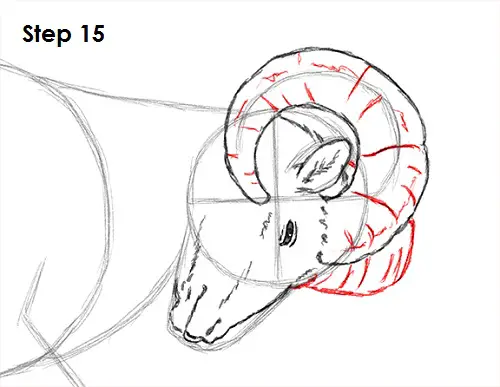
Step 15: Draw the ram's horn on the other side under the first one. Simply draw a curved line under the first horn that extends toward the back of the head. Add a few lines within the shape of the horns for extra detail. Follow the path of the horns as you draw the lines to give them a rough bony texture.
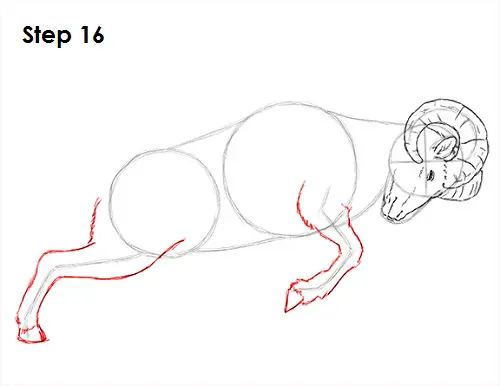
Step 16: Use the lines under the body as guides to draw the legs that are on this side. Lightly sketch the shape of the ram's leg as you follow the path of the line. When you get the structure of the leg right, darken the lines. Make the joints a bit rounder where the guide line bends and add the hoof at the bottom. Now use the line on the left as a guide to draw the hind leg on this side of the body. Remember to sketch lightly as you follow the guide and only darken the lines when you get the structure right. The top part of the hind leg should be thick. Make the joints rounder and add the hoof at the bottom.
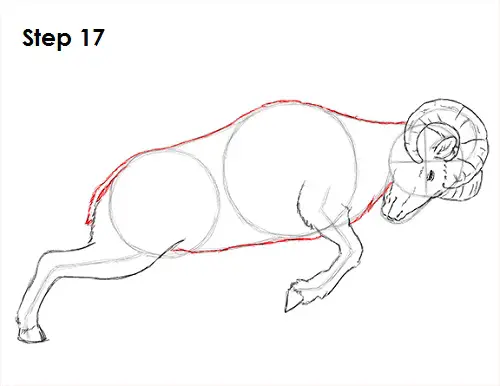
Step 17: Use the remaining shapes and lines to draw the rest of the ram's body. Add a few extra lines on the left side of the body, above the leg, for the tail.
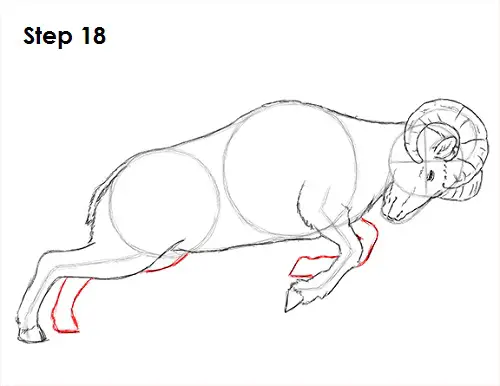
Step 18: Draw the set of legs on the other side of the ram's body by using the first set as a template. Sketch lightly at first as you duplicate the shape of the leg. The lines for the legs on the other side shouldn't overlap with the lines for the legs on this side.
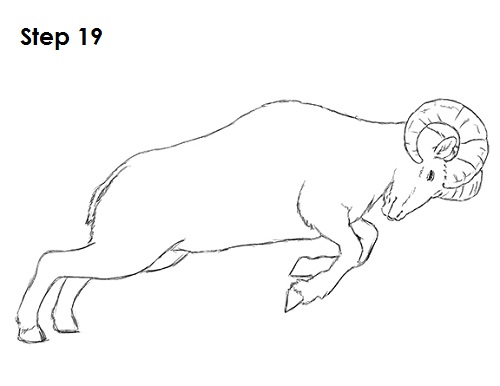
Step 19 (optional): For a cleaner look, erase as much as you can of the initial guide lines. Don't worry about erasing all of the guides. It's okay to leave some behind. Re-draw any final sketch lines that you may have accidentally erased.
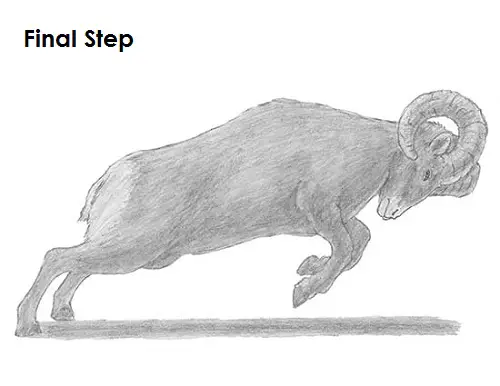
Final Step (optional): Add some shading to your ram drawing to give it more dimension and volume. Pick the direction of the light source when shading so that the shadows are consistent with it. Vary the pressure on your pencil to get different degrees of tonal value. Add the value lightly at first, then gradually buld up to the level of darkness that you want.
Add a cast shadow underneath. This helps emphasize the charge and jump of the ram. Use a darker value near the middle of the shadow and a lighter value along the edge for the shadow's diffusion.
You can add more value throughout your ram drawing for extra detail. Bighorn sheep's coats are a solid color without any pattern, so use a single value for the entire body. Add the value by using strokes that go in the general direction of the fur. Bighorn sheep can have thick coarse fur, so don't worry too much about adding the coat smoothly. A little texture is okay. The rump of bighorn sheep usually tends to be lighter than the rest of the body, so add a light value here. Don't forget to pause the "How to Draw a Ram" video after each step to draw at your own pace.
Thanks for visiting! Subscribe to the How2DrawAnimals YouTube Channel for a new tutorial every Tuesday.
To learn how to draw popular cartoon characters, visit EasyDrawingTutorials.com.
RELATED TUTORIALS
 |
 |
 |