





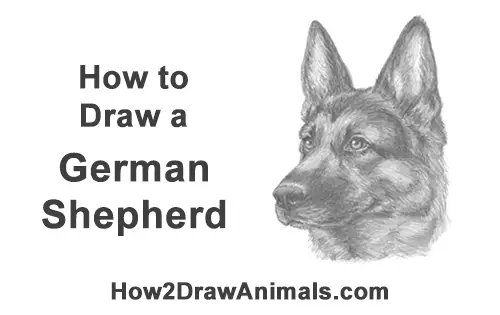
In this free art lesson, you'll learn how to draw a German Shepherd Dog head step-by-step.
Stay tuned for more free drawing lessons by:
- Liking us on Facebook
- Subscribing on YouTube.com
- Following us on Instagram
This page contains Amazon affiliate links. If you choose to purchase through these links, I earn a small commission at no extra cost to you.
All of the tutorials on How2DrawAnimals.com are great for beginners and experienced artists alike. These online lessons are easy to follow, teaching you basic drawing techniques while guiding you through the animal step by step. Each guide features a video tutorial option along with detailed photos and written text. While you're here, open one of these tutorials to draw next!
RELATED TUTORIALS
 |
 |
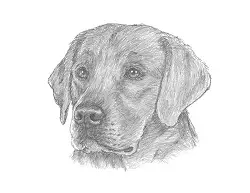 |
To draw a German Shepherd head step by step, follow along with the video tutorial below and pause after each step to work at your own pace. You may find it easier to use the illustrations below the video. The new lines in each step are highlighted in red, so you'll know exactly what to draw next. You might want to open the video in a new tab and combine both methods. Take your time and enjoy the process.
Materials You’ll Need
Before starting, gather these basic drawing supplies:
- Pencil (an HB lead pencil is best for light sketches)
- Eraser
- Black ink pen or marker
- Drawing paper
- Colored pencils or markers
For the first few steps, don't press down too hard with your pencil. Use light, smooth strokes to begin.
Start with Simple Lines and Shapes
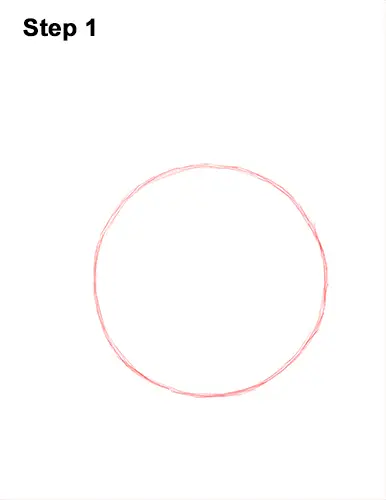
Step 1: Draw a big circle as a guide for the head. First make four small marks to indicate the circle's height and width, then connect them using curved lines. Sketch lightly at first so that it's easy to erase if you make a mistake. If you're struggling, trace the outer rim of a glass, bowl, or any circular object. For a more detailed guide on different ways to draw circles, check out this tutorial: Four simple ways to draw a circle.
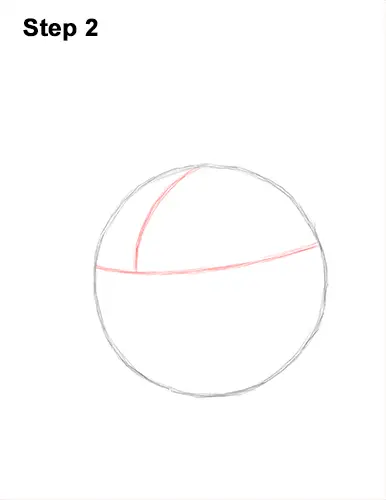
Step 2: Draw a long, curved, horizontal construction line across the circle. Place this line slightly higher than the middle. Add a curved, vertical line on the top, left side. These construction lines will help you position the facial features later.
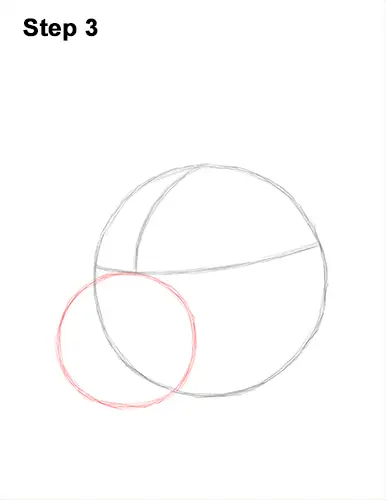
Step 3: Draw a smaller circle on the lower, left side of the head as a guide for the muzzle. Use the four-marks technique for this shape as well. Almost half of this circle should extend outside the main circle. Pay attention to its position; it should be about one-third the size of the first one.
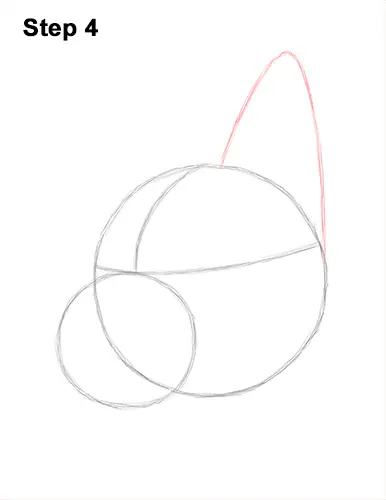
Step 4: On the top, right side of the head, draw a large triangle-like arc as a guide for the first ear. German Shepherds have prominent ears, so don't make this guide too small. Notice how far down the right side it connects.
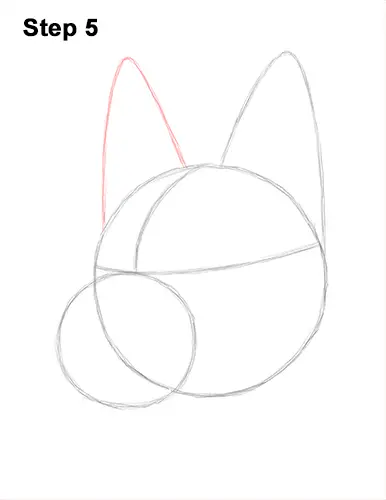
Step 5: Draw another large triangle-like arc on the top, left side of the head as a guide for the other ear.
Finish Up the "Skeleton"
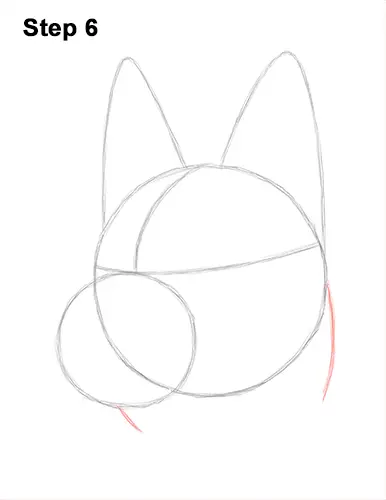
Step 6: Under the head, add a couple of short, curved lines to indicate the neck.
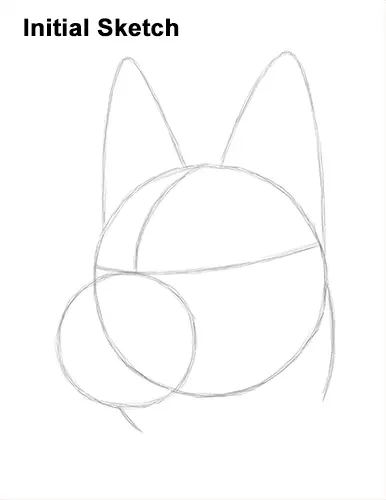
That's it for the initial guidelines! From this point on, press down harder with your pencil for a more defined sketch.
Now Add Details
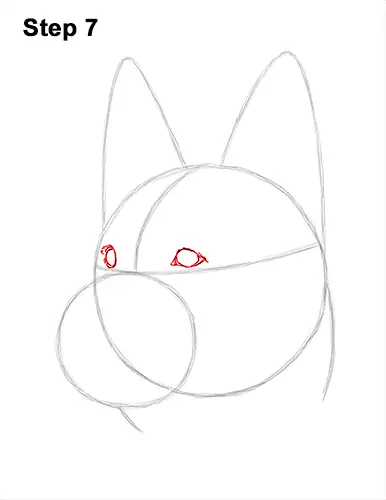
Step 7: Lightly sketch the eyes inside the head as two small circles. They should sit on top of the horizontal guideline on either side of the vertical construction line. Once the position and size look correct, darken the lines. The eye on the left should be slightly narrower than the right because the head is turned at an angle. Thicken the edges of the left eye and add short strokes around both to represent fur. Include angled lines on the right eye for the corners, and add extra line details to the left side.
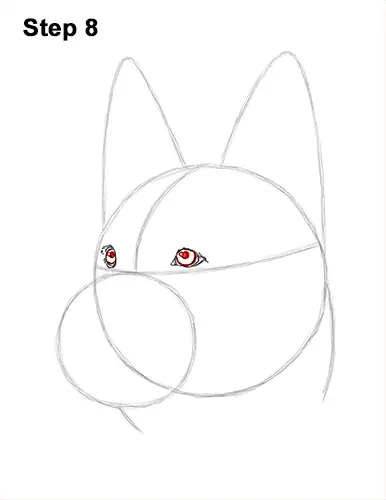
Step 8: Inside each eye, draw a tiny circle off to the side for catchlights. Add a smaller central circle and shade it in for the pupils, making sure not to overlap the highlights. The pupils should sit slightly closer to the upper edge of the eye.
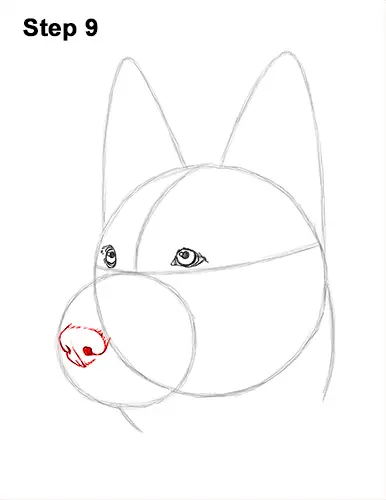
Step 9: Inside the muzzle guide, lightly sketch a small oval for the nose, fitting it within the space where the initial circles intersect. Once correct, darken the outer lines. Curve the left side inward to form the nostril and make the bottom area pointier. Add a short vertical split at the base. Darken the right side, curving inward for the other nostril, and use short strokes along the top edge for texture. Shade the right nostril; the left one remains mostly hidden from this perspective.
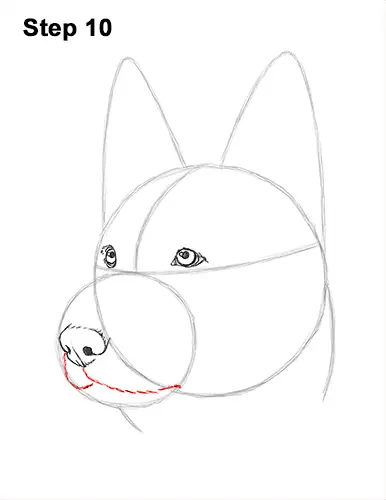
Step 10: Beneath the nose, sketch a line stretching toward the right edge of the muzzle guide to form the upper lip. Darken it with short, fur-like strokes. On the left side, draw a short, curved line for the opposite side of the mouth. The mouth should fit entirely within the small initial guide circle, leaving room below for the chin.
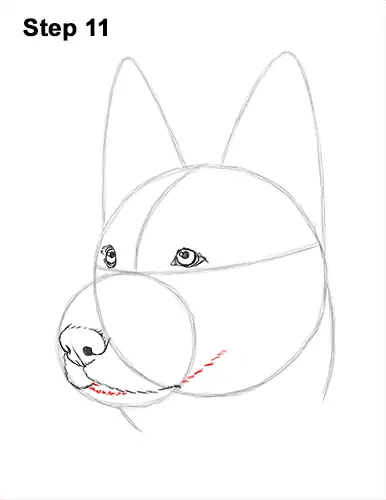
Step 11: Below the mouth, draw a small, curved line using short strokes to form the chin. Add additional short strokes to the right side of the mouth to define the structure of the muzzle.
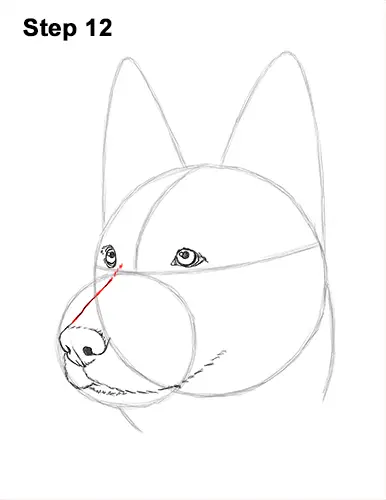
Step 12: Draw a sloping line above the nose to establish the bridge of the muzzle. This line should connect from the top-left section of the nose toward the right corner of the left eye.
Stay Patient and Keep Drawing
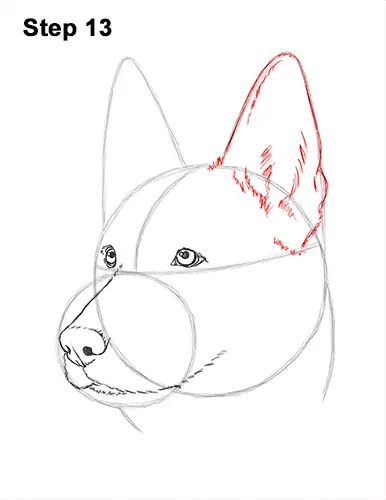
Step 13: Darken the outer arc on the top right to define the shape of the first ear. Curve the lower base inward toward the head and add a series of short strokes along the bottom for a furry texture. Incorporate longer strokes inside the ear shape to represent inner ear hair.
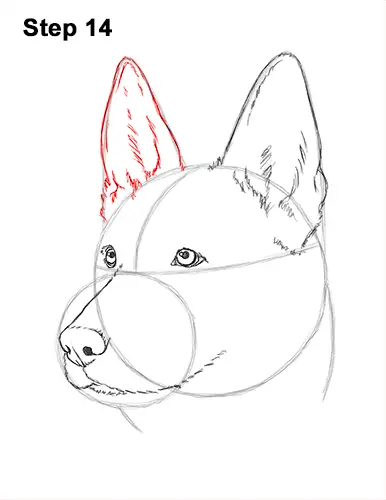
Step 14: Use the left arc as a guide to render the second ear in the same manner. Darken the outline while making the bottom lines curvier. Add a couple of inner lines parallel to the outer edge to create depth, and use short strokes along the inside for texture.
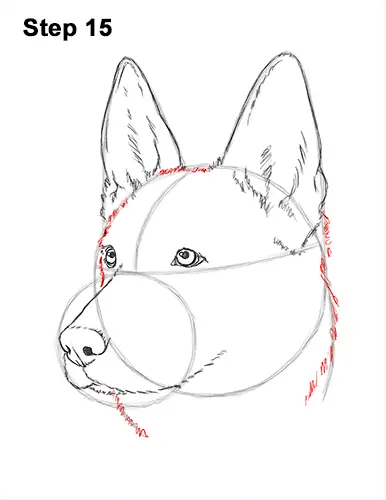
Step 15: Follow the main circle guide to complete the rest of the head shape. Use short strokes along the path of the circle to block out the fur. Narrow the left side slightly so the edge sits closer to the eye than the initial guideline. Avoid darkening the bottom of the circle; instead, establish the neck using longer strokes to show thicker fur.
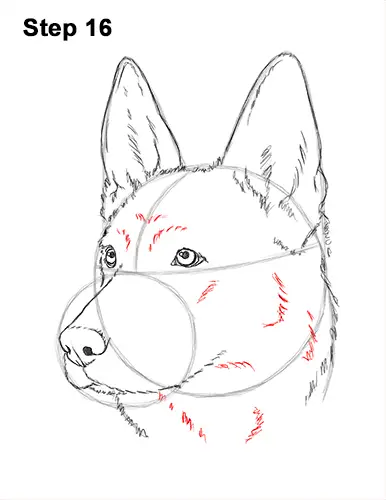
Step 16: Add short strokes across the inner areas of the head to emphasize coat texture. Use quick strokes above the eyes to build up a brow, making the expression more realistic. Add structural strokes on the lower right face and underneath the muzzle to represent loose skin on the neck.
Now It's Time to Shade
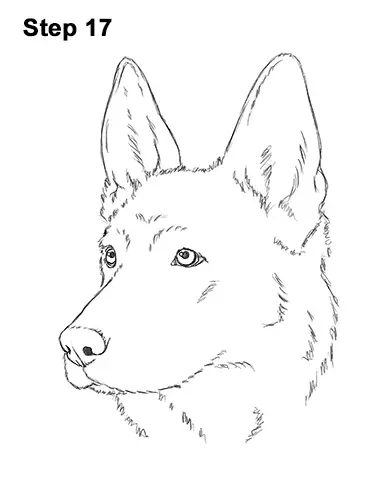
Step 17: Clean up your drawing by erasing the initial guidelines. Don't worry about removing every single mark, as a few light lines can blend into the drawing. Re-darken any final lines that were accidentally softened during erasing.
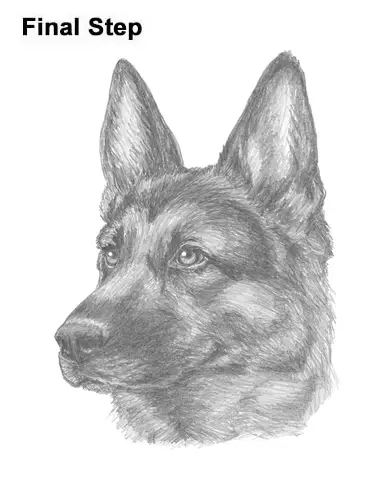
Final Step: Apply shading to bring out extra depth. Use dark values for the outer ears, medium values for the inner sections, and light values for the centers. Work in short strokes to mimic fur. Create a wide, dark band across the forehead. For an in-depth look at value application, view this tutorial: How to shade.
Darken the fur around the eyes significantly. For the irises, apply a medium value at the top and transition to a lighter value toward the bottom. Leave a small, light section around the right eye and use a medium value for the brow region, following the natural direction of hair growth.
Use a dark tone for the base of the nose and a lighter value near the top to suggest a highlight, leaving a small strip completely white. Keep the skin immediately surrounding the nose very light. Gradually darken the muzzle toward the right side. Ensure the area directly to the right of the nose is dark, but avoid pressing too hard to prevent tearing the paper. Fill out the rest of the head with a medium value, working patiently through the process.
Leave slight gaps between strokes so the paper shows through, enhancing the texture. Begin with light layers so errors are easy to correct, then build up your darks. Since coat markings vary, using photo references of a pet or standard breed pattern can help improve accuracy. Remember to pause the videos as needed to work at your own pace.
Buy My Step-by-Step Art Books on Amazon!
If you enjoyed drawing with me and want to expand your artistic skills, please consider checking out my step-by-step drawing books on Amazon! My books break down a wide variety of animals into simple geometric shapes, making it easy and fun for artists of any skill level to follow along. Every purchase directly helps support this site so I can keep creating high-quality, free tutorials for the art community.
Click Here to Order Your Copy Today!
Thanks for visiting! Subscribe to the How2DrawAnimals YouTube Channel for a new tutorial every week.
To learn how to draw popular cartoon characters, visit EasyDrawingTutorials.com.
RELATED TUTORIALS
|
|
|